
Travel Fitness: The Exercises That Make Every Trip Easier
The short answer: Travel fitness is about preparing your body for the physical demands of a trip: lifting luggage, walking for hours, climbing stairs and sitting for long stretches. The most useful exercises are functional strength moves like shoulder presses, step-ups, lunges, Romanian deadlifts, farmer’s carries and core work such as planks. You do not need to train to extremes. A little preparation, plus a short bodyweight workout you can do anywhere while you are away, means you feel strong and capable and arrive ready to enjoy your trip rather than feeling sore and stiff.
Summary
Travel should feel exciting, not exhausting. Whether it is a weekend away or a long awaited overseas trip, being physically prepared makes the whole experience far more enjoyable. The good news is that you do not have to guess your way through it.
Travel asks specific things of your body, and each of those demands can be trained for. This article breaks down the six most common physical challenges of travelling and the exercises that prepare you for each one. It also gives you a complete do-anywhere workout, a simple plan for the weeks before you leave, stretches for long flights, and practical nutrition and recovery tips so you feel your best from the first flight to the last flight of stairs.
When you train with a purpose, your next trip can feel easier from start to finish, and you come home without having lost the progress you worked for.
Key Topics
Why preparing your body makes travel more enjoyable
The six physical demands of travel and how to train for each
A complete travel-ready workout you can do anywhere, no equipment needed
How to prepare in the weeks before you travel
How to stay active while you are away
Stretching and mobility for long flights and train journeys
Nutrition and hydration tips for feeling your best on the move
How to get back into your routine after a trip
Why travel fitness matters
Being fit for travel is not about looking a certain way or hitting the gym harder before you leave. It is about the practical reality of what a trip demands from your body. A single day of sightseeing can involve tens of thousands of steps, several flights of stairs, hours on your feet and a fair amount of lifting and carrying, often after a long, cramped journey to get there.
When your body is prepared for that, everything changes. You explore more because you are not exhausted by lunchtime. You avoid the strains and niggles that can derail a holiday. You keep the training momentum you have built rather than starting from scratch when you get home. And you simply enjoy yourself more, because you are present and energised instead of sore and stiff. A little preparation pays off every single day of your trip.
The six physical demands of travel, and how to train for them
Travel places a handful of very predictable demands on your body. Train for these and the rest tends to take care of itself.
1. Lifting luggage into overhead lockers
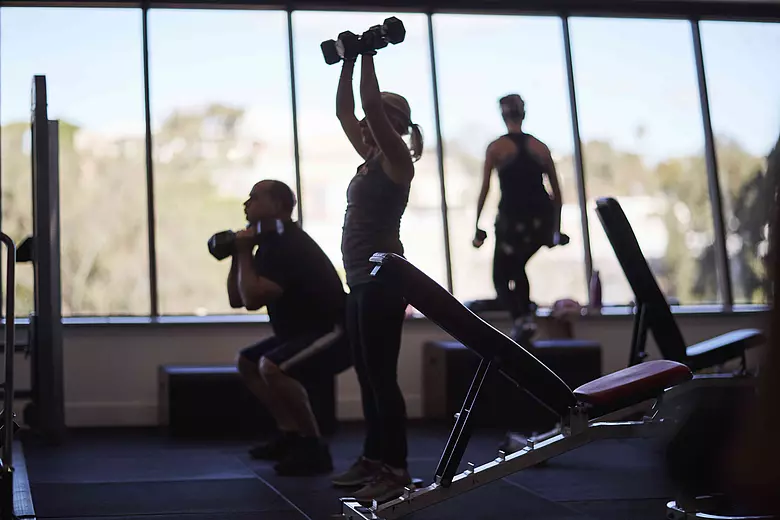
The challenge: heavy bags at awkward angles can strain your shoulders and back, and you want to move confidently and independently without worrying about injury. What to train: dumbbell shoulder press to build overhead strength. Even a few sets of eight to twelve reps twice a week builds noticeable confidence overhead.
2. Walking 20,000 to 30,000 steps a day
The challenge: long days on your feet lead to fatigue, sore feet and tight hips, and you want to enjoy exploring rather than needing to stop every hour. What to train: walking lunges to build endurance and mobility, and incline treadmill walking to prepare for real world conditions. In the weeks before you go, gradually lift your daily step count so the big days abroad feel normal, not shocking.
3. Climbing stairs with no lift in sight
The challenge: stairs quickly expose weak legs and poor conditioning, and many hotels, train stations and landmarks involve repeated climbing. What to train: step-ups to mimic stair climbing and build single leg strength, and goblet squats to improve lower body strength and control. Taking the stairs in daily life is free, specific practice.
4. Standing all day with little rest
The challenge: lower back fatigue and poor posture creep in quickly when you are queuing, waiting for transport and sightseeing for hours. What to train: Romanian deadlifts to strengthen your posterior chain and support posture, and calf raises to improve lower leg endurance and keep circulation healthy through long standing days.
5. Carrying backpacks and bags comfortably
The challenge: a weak upper back leads to rounded shoulders and tension, when carrying bags should feel stable and comfortable rather than a burden. What to train: farmer’s carries to build grip, core and upper body strength, and seated or band rows to improve posture and shoulder support.
6. Avoiding back pain on planes and trains
The challenge: sitting for long periods leaves your core inactive and your back sore, and you want to arrive feeling fresh rather than stiff and tight. What to train: planks to build deep core stability, and dead bugs to improve control and protect your lower back.
A simple travel-ready workout you can do anywhere
You do not need a gym, and you do not need much time. This bodyweight session covers your whole body and works just as well in a hotel room, a park or a spare corner of an airport hotel. Aim for around twenty minutes.
Warm up (about 5 minutes): march on the spot, roll your shoulders and arms, do some slow bodyweight squats and a few gentle hip circles to loosen up.
Main circuit (2 to 3 rounds):
Bodyweight squats: 12 to 15 reps
Reverse lunges: 10 each leg
Push-ups, on the floor or against a bench or bed: 8 to 12 reps
Glute bridges: 15 reps
Step-ups onto a sturdy step or chair: 10 each leg
Plank: hold for 30 to 45 seconds
Finisher (optional): one to two minutes of brisk marching, star jumps or skipping to lift your heart rate.
Cool down: a few gentle stretches for your legs, hips and back, holding each for around thirty seconds. Done a few times across your trip, this is more than enough to maintain your strength and energy.
How to prepare in the weeks before you travel
A short run up makes a big difference. Here is a simple way to structure it.
Four to six weeks out: train the key movements above two to three times a week, and start nudging your daily step count upward so long walking days feel familiar.
One to two weeks out: keep training, but avoid anything brand new or unusually heavy that might leave you sore. This is about arriving fresh, not exhausted.
The day before and travel day: keep moving with a walk and some light stretching, and start hydrating well before you even reach the airport.
How to stay active while you are away
Preparing your body is half the picture. Keeping things ticking over while you are travelling is the other half, and it is easier than most people think. The goal on a trip is usually to maintain what you have built rather than chase new gains, and that takes very little.
Walk everywhere. Sightseeing on foot is one of the best forms of exercise there is, and it often takes care of your movement for the day on its own.
Do a short bodyweight session. The circuit above covers your whole body in about twenty minutes with no equipment. Two or three of those across a week keeps you strong.
Use the stairs. Skip the lift where you can. A few flights add up over a trip and keep your legs and heart working.
Make the most of the hotel. Many have a small gym or a pool. Even fifteen focused minutes is worthwhile.
Consistency beats perfection here. If you would like your program to travel with you, connect with your trainer and use the MyVision app to take your sessions anywhere, so staying on track never depends on finding a gym
Stretching and mobility for long flights
Hours of sitting are hard on your hips, back and circulation. A little movement makes arriving so much more comfortable. Work these in during and after a long journey:
Seated figure-four stretch for your glutes and hips, cross one ankle over the opposite knee and lean gently forward.
Gentle seated spinal twists to ease your lower back.
Neck and shoulder rolls to release the tension that builds while sitting.
Ankle circles and seated calf raises to keep the blood moving in your legs.
When you can stand, a standing hip flexor stretch and a calf stretch help undo the effects of sitting.
Try to get up and move around every hour or two on a long flight or train ride. It keeps you loose and supports healthy circulation.
Nutrition and hydration on the move
Travel days and air conditioned cabins are dehydrating, so drink water regularly and go easy on alcohol, which worsens both dehydration and sleep. Where you can, keep meals built around protein and vegetables to stay full and energised, and pack simple snacks like nuts or fruit so you are not stuck relying on whatever the airport offers. None of this means missing out. Enjoying the local food is part of the trip, so aim for balance rather than restriction. If you would like help setting up habits that travel well, a personalised nutrition approach makes it much easier.
Getting back into your routine after a trip
Coming home can be the hardest part, so make it easy on yourself. Book your first session back before you even leave, so it is locked in and waiting for you. Ease in with a lighter workout rather than trying to make up for lost time in one go, and give yourself a day or two to adjust to the time zone. If you stayed active while away, you will often find you pick up right where you left off, which is exactly the point of all that preparation.
How Vision Personal Training can help
Travel fitness is not about pushing to extremes. It is about feeling confident in your body, having the energy to enjoy your trip, and knowing you can handle whatever the day brings. When you train with a personal trainer, these kinds of functional exercises are built into your program as a matter of course, so you feel strong, capable and ready well before you pack your bags. Your trainer can also help you plan around a trip, so you arrive prepared and slot straight back in when you return.
Whether you are staying home or planning a getaway, if you want to feel your best while on the move, now is a great time to start. Your nearest Vision studio can help you build the strength and habits that make every trip easier, from the first flight to the last flight of stairs.
Frequently asked questions
What exercises should I do to prepare for a big trip?
Focus on functional strength that mirrors what travel asks of your body. Shoulder presses help with lifting luggage, step-ups and lunges prepare you for stairs and long walking days, deadlifts and calf raises support standing and posture, farmer's carries build the strength to carry bags comfortably, and core work like planks protects your back on long flights.
How long before a trip should I start training?
Give yourself around four to six weeks where you can. That is enough time to build noticeable strength and walking endurance without rushing. Train the key movements two to three times a week and gradually increase your daily steps. In the final week, ease off anything new or very heavy so you travel feeling fresh rather than sore.
How do I stay fit while travelling?
Prepare your body before you go with regular strength training, then stay active while you are away. Walking is your easiest tool, and a short bodyweight session of squats, lunges, push-ups and planks in your room keeps things ticking over. Aim for consistency rather than perfection, since maintaining your fitness on the road is easier than rebuilding it at home.
What is a good hotel room workout with no equipment?
A simple bodyweight circuit works well: bodyweight squats, reverse lunges, push-ups, glute bridges, step-ups and a plank. Run through two or three rounds and you have covered your whole body in around twenty minutes, no equipment required. Add a brisk walk or some stairs and you have a solid day of movement.
How can I avoid back pain when flying?
Build a strong, stable core before you travel with exercises like planks and dead bugs, as this protects your lower back during long periods of sitting. On the day, get up and move regularly, walk the aisle when you can, and do some gentle stretching to keep your hips and back from stiffening up.
What stretches should I do on a long flight?
Try a seated figure-four stretch for your glutes, gentle spinal twists, neck and shoulder rolls, and ankle circles to keep the blood moving. When you can stand, a standing hip flexor stretch and a calf stretch help undo the effects of sitting. Aim to get up and move around every hour or two.
Do I need a gym to stay fit while travelling?
No. Walking plus a short bodyweight routine is more than enough to maintain your fitness while you are away. The goal on a trip is usually to hold on to what you have built, not to make new gains, and that is very achievable with no equipment at all.
How do I keep up my training on holiday?
Keep it short and flexible. A fifteen to twenty minute bodyweight session a few times across your trip, plenty of walking, and a plan you can follow anywhere all make it easy. Tools like online training and a training app mean you can take your program with you and stay on track wherever you are.
How do I get back into training after a holiday?
Ease back in rather than trying to make up for lost time in one session. Book your first session back before you even leave, so it is locked in, and start with a lighter workout to find your rhythm again. If you stayed active while away, you will often pick up right where you left off.