When clients started coming to us on Ozempic, Wegovy and Mounjaro, my first reaction wasn't concern. It was curiosity. These medications are genuinely changing things for people who have spent years stuck, and I get why they're so popular. The scale finally moves. The constant food noise in your head quiets down. For a lot of people in their 40s and 50s, it feels like the first real break they've caught in years.
But the more I read the research, the more one thing started nagging at me. What's actually coming off when you lose weight on these drugs?
Because it turns out, it isn't just fat. And that changes the conversation significantly.
The Muscle Loss Problem We Need to Talk About
Here's a number that stopped me when I first came across it. In the landmark STEP-1 clinical trial for semaglutide, the active ingredient in Wegovy, participants lost an average of 15.3 kilograms over the study period. Sounds like a win. But when researchers broke down what those kilograms were actually made of, nearly 6.9 kilograms of it was lean mass, meaning muscle tissue. That's close to 45% of all weight lost coming from muscle, not fat (Cell Metabolism, 2025).
Now, in most weight loss scenarios, we'd expect around one quarter of weight lost to come from lean tissue. That's already not ideal, but it's manageable. Semaglutide, at least in some studies, appears to push that number considerably higher.
A systematic review in PubMed looked at six studies involving over 1,500 overweight and obese adults on semaglutide and found that reductions in lean mass ranged from almost nothing up to 40% of total weight lost depending on the trial. That variability matters because it tells us something important. Not everyone loses the same amount of muscle, which means the choices you make alongside the medication really do make a difference.
This isn't a reason to avoid these drugs. But it is a very good reason to think carefully about what you're doing alongside them.
Why This Hits Harder After 40
Here's the part that I think gets glossed over most often, and it's the part that concerns me most for the people I work with.
We're already losing muscle as we age. It's just biology. Research shows that skeletal muscle mass declines at a rate of 3 to 8 percent every decade after 40, and that rate picks up speed after 65. The clinical term is sarcopenia, and it's not just about how you look or how strong you feel at the gym. Sarcopenia is linked to falls, reduced mobility, loss of independence, cognitive decline and a higher risk of early death (International Clinical Practice Guidelines for Sarcopenia, Journal of Nutrition Health and Aging, 2018).
So think about what that means in practice. You're already fighting a natural decline in muscle from your 40s onwards. Then you add a medication that, without the right intervention, can strip away a significant chunk of additional muscle on top of that. The number on the scales goes down and that feels good. But underneath it, you might quietly be becoming more fragile, less capable and metabolically worse off than before.
What the Research Actually Shows Can Help
And here is where I want you to feel some genuine optimism, because the answer isn't complicated. It just requires you to be active in the process rather than passive.
A six-month prospective study followed 200 adults who had just started either semaglutide or tirzepatide. The difference from most GLP studies was that these participants were also given structured guidance on resistance training and protein intake right from the start. After six months they had lost an average of 13% of their body weight, which is significant, but here's the part worth sitting with. Only around 3% of their muscle mass was lost in the process (Medscape, April 2025). That's a completely different story from the STEP-1 numbers, and the variable that changed was whether people were doing the resistance training or not.
What This Actually Looks Like
I want to be really clear here because I think the word "gym" puts some people off and I understand why. You don't need to become someone who lives there. You don't need to be lifting heavy things for hours.
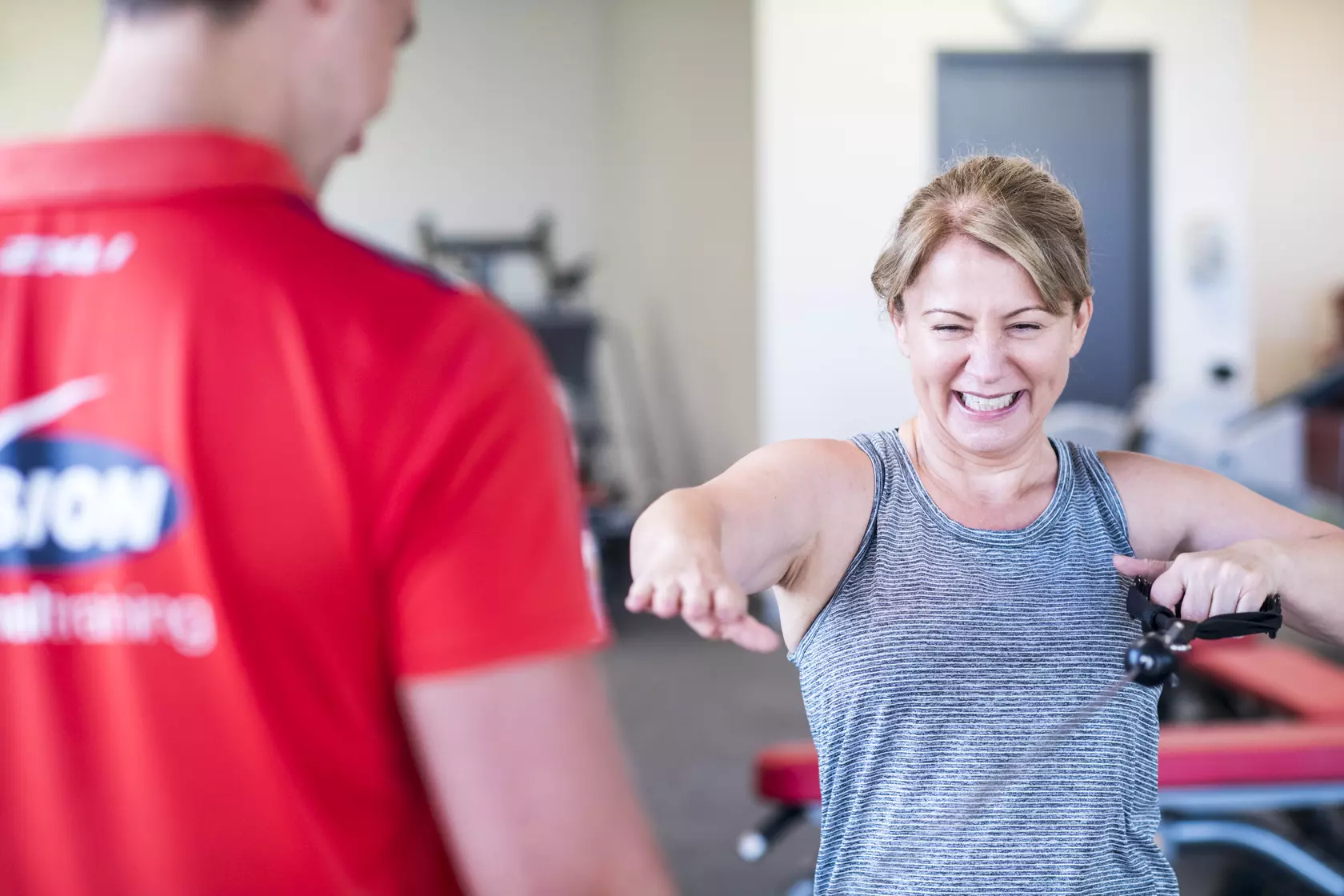
What the research points to is two to three sessions of resistance training per week, working at a moderate to high intensity for your level, and gradually increasing the challenge over time as you get stronger. That last part is what's called progressive overload and it's what keeps the muscle stimulus going rather than your body adapting and switching off.
The exercises that give you the most return are the ones that work large muscle groups. Squats, leg press, rows, chest press. These movements recruit the most muscle tissue and create the strongest signal for your body to hold onto and rebuild what it has.
The other piece is protein. The research is consistent that adequate protein intake amplifies what resistance training does for muscle, and the two together are significantly more effective than either on its own. For most people over 40 this means actively thinking about protein at every meal rather than just hoping dinner covers it.
The Bigger Picture
GLP medications are a tool. A legitimately powerful one for the right people. But the outcome of any tool depends on how you use it.
If you take the medication, eat less because your appetite drops, and leave the rest to chance, there's a real risk that a significant portion of what you lose is muscle rather than fat. You'll weigh less. You might not feel better. And you could be setting yourself up for bigger problems five or ten years down the track.
But if you treat the medication as one part of a bigger picture that includes consistent resistance training and enough protein, the evidence says you can tilt things heavily in your favour. Losing mostly fat, keeping your muscle, staying strong, staying functional, and building a body that actually serves you well for the long haul.
That's the outcome worth chasing. And the good news is that unlike the medication, the resistance training part never stops working as long as you keep turning up.
*The information provided in this article is for general informational and educational purposes only and does not constitute personalised health, fitness, medical, or nutritional advice. While we aim to ensure accuracy at the time of publication, individual circumstances, program details, and best practice guidelines may change and may vary from person to person. Any exercise, training, or nutrition information is general in nature and may not be suitable for everyone. You should consult a qualified health professional or your GP before starting any new exercise or nutrition program, particularly if you have an existing health condition or injury. Vision Personal Training accepts no liability for actions taken based on the information provided in this article.
References
Cell Metabolism (2025). Unexpected effects of semaglutide on skeletal muscle mass and force-generating capacity. Cell Metabolism
STEP-1 Trial. Referenced via Cell Metabolism analysis of lean mass contribution to total weight loss with semaglutide.
PubMed Systematic Review (2024). A systematic review of the effect of semaglutide on lean mass: insights from clinical trials. PubMed, NCBI.
Medscape (April 2025). Resistance Training and Protein May Lower GLP-1 RA Muscle Loss. Medscape Medical News.
Journal of Nutrition Health and Aging (2018). International Clinical Practice Guidelines for Sarcopenia (ICFSR): Screening, Diagnosis and Management. J Nutr Health Aging, 22