How to Protect Your Muscle on GLP-1 Medications Like Ozempic
The short answer: GLP-1 medications like Ozempic, Wegovy and Mounjaro are powerful at reducing appetite and driving fat loss, but research shows that roughly a quarter to a third of the weight lost can be muscle rather than fat. The two most effective ways to protect your muscle are resistance training and eating enough protein, even when your appetite is low. The goal is to lose fat while keeping the muscle that supports your metabolism, strength and long term health, so it pays to track your strength, not just the number on the scale. Always work alongside your GP.
Summary
GLP-1 receptor agonist medications are one of the fastest growing developments in healthcare. As obesity rises across the world, these medications are moving quickly from clinical curiosity to mainstream prescription. They are genuinely effective at reducing appetite and driving weight loss.
There is an important catch that often goes unmentioned. Because these medications produce such significant weight loss, a meaningful portion of what is lost can be muscle, not just fat. Losing muscle reduces your metabolism, your strength and your long term health, yet it is largely preventable. This article explains how the medications work, why muscle loss happens, and the practical training and nutrition approach that protects the muscle you have worked hard to build.
Key Topics
How GLP-1 medications work and why they drive such significant weight loss
Why a portion of the weight lost can be muscle rather than fat
Why muscle loss happens during rapid weight loss
The protein challenge, and why it is harder than it sounds
The Vision Personal Training approach to protecting your muscle
How to get the best long term result from your medication
How GLP-1 medications work
GLP-1, or glucagon-like peptide-1, receptor agonists mimic hormones your gut naturally releases after eating. They work through several pathways at once:
Increased satiety, so you feel full faster and for longer.
Slowed gastric emptying, so food stays in the stomach longer and the feeling of fullness lasts.
Central appetite suppression, acting directly on the brain’s hunger centres to reduce cravings.
Enhanced insulin secretion, the original benefit, still relevant for people managing diabetes.
The net result is a significant, sometimes dramatic, reduction in how much you eat. That is what creates the weight loss, and it is also what creates the training and nutrition challenges worth planning for.
The lean muscle loss problem
The single most important training consideration on a GLP-1 medication is lean muscle loss. This is not unique to these medications. It happens with any large calorie deficit, whether from bariatric surgery or dieting alone. What makes it a bigger concern here is simply the amount of weight these medications can produce.
Here is what the research consistently shows:
Across most studies, roughly 25 to 30 percent of total weight lost is lean mass rather than fat, and some trials report even higher, regardless of the method used.
More rapid weight loss usually means greater muscle loss.
Resistance training is the most effective tool to reduce this, with studies consistently showing it protects muscle during a calorie deficit.
Quality matters, not just quantity. Fat stored within the muscle is common with excess weight, and reducing it can actually improve muscle quality over time.
Why muscle loss happens
Several things combine during rapid, appetite-suppressed weight loss to put muscle at risk:
A large energy deficit leaves insufficient fuel to support muscle repair and growth.
Reduced anabolic signalling, as a prolonged deficit dampens the hormonal signals that build muscle.
Less mechanical load, because as bodyweight drops, your muscles are challenged less during everyday movement.
Lower glycogen stores, as reduced carbohydrate intake limits training fuel and recovery.
Impaired recovery, since lower calorie and protein intake slows repair after exercise.
The protein challenge
The obvious answer to muscle loss is to eat more protein. On a GLP-1 medication, that is harder to do than it sounds:
Nausea and other digestive side effects are the most common complaints, which makes eating more uncomfortable.
Protein is slow to digest, so it adds to the fullness effect and can make nausea worse.
Appetite is already dramatically reduced, so many people struggle to meet even basic protein targets.
Protein shakes or supplements can help bridge the gap, though they still need to be introduced carefully given how sensitive digestion can be. Pairing adequate protein with resistance training is what protects muscle, and creatine is another well researched option that can support muscle alongside your training.
The Vision Personal Training approach
Our approach is built around protecting the muscle you have while the medication does its job on appetite and fat. Here is what that looks like in practice.
Resistance training is the priority, not an afterthought
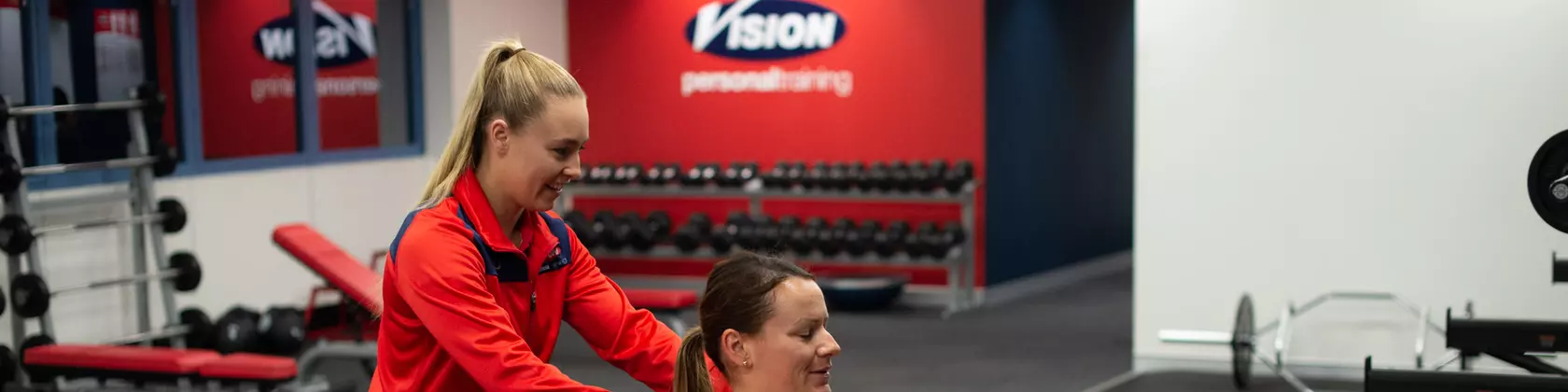
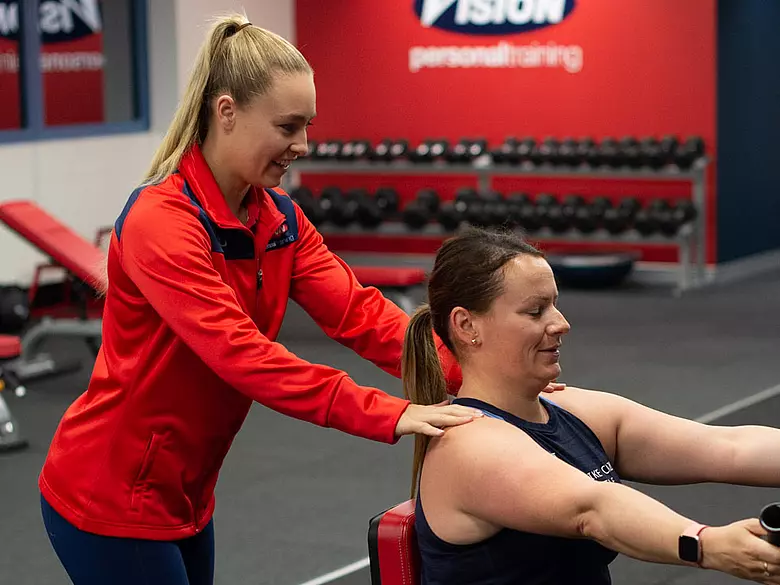
Without the right training stimulus, your body can lose muscle along with the fat, so your program is built around resistance training first. We monitor your strength numbers session to session, so we know your program is protecting the muscle you have worked hard to build, rather than just chasing a number on the scale.
We help you prioritise protein, even when appetite is low
One of the biggest challenges on a GLP-1 medication is eating enough protein when you are simply not hungry. Your trainer will work with you on practical strategies, whether that is smaller protein forward meals, a shake between sessions, or whatever fits your day, because protein is what gives your training something to build on.
Your program flexes with how you are feeling
Energy dips, mild nausea and lower capacity are common, especially early on or after a dose increase. We adjust intensity and volume in real time rather than pushing through a session that will not serve you. Showing up consistently matters far more than any single tough workout.
Hydration is part of the conversation
Reduced appetite often means reduced fluid intake too, and combined with any digestive side effects, dehydration is a real risk. Your trainer will check in on this as part of your regular sessions. It is a small thing that makes a big difference to how you feel and perform.
We track what actually matters, strength, not just scale weight
The scale will move regardless of what is being lost. We measure strength, body composition and how you are tracking against your goals, so you get a true picture of progress and the confidence that the muscle you are building is sticking around.
Getting the best result from your medication
A GLP-1 medication can be a powerful tool, and it works best as part of a bigger plan. If you are still weighing up your options, it is worth reading why starting with exercise first gives you a stronger base to protect. If you are ready for structured support, personal training with Vision brings your resistance training, nutrition and accountability together so more of what you lose is fat, and the muscle stays. Speak with your GP about the medication itself, and let us handle the training and nutrition that make it work for the long term.
Frequently asked questions
Do you lose muscle on Ozempic and GLP-1 medications?
Some muscle loss can occur, but it is not unique to these medications. It happens with any significant weight loss. Research consistently shows that roughly 25 to 30 percent of the total weight lost can be lean mass rather than fat, and some trials report even more. The good news is that this is largely preventable with the right training and nutrition.
How do I keep muscle while on GLP-1 medications?
The two most effective tools are resistance training and adequate protein. Strength training two to three times a week signals your body to hold on to muscle, while enough protein gives it the material to do so. Tracking your strength rather than only the scales helps confirm the muscle you have built is being protected.
How much protein should I eat on GLP-1 medications?
A common guide during active weight loss is around 1.2 to 1.6 grams of protein per kilogram of body weight per day. That can be hard to reach when appetite is low, so smaller protein forward meals and the occasional shake often help. Work with your trainer or a dietitian, and speak to your GP if side effects make eating difficult.
Can I exercise on Ozempic if I feel nauseous or low on energy?
Usually yes, with adjustments. Energy dips and mild nausea are common, especially early on or after a dose increase. The aim is to adjust intensity and volume rather than push through a session that will not serve you. Consistency matters more than any single hard workout, and staying hydrated helps. Always follow your doctor’s guidance.
Should I focus on cardio or weights on GLP-1 medications?
Resistance training is the priority, because it is the most effective way to protect muscle while you lose fat. Some cardio is fine and good for your heart, but if your time is limited, strength work should come first.
Is it better to start exercise before going on a GLP-1 medication?
Building strength and good habits before you start gives you a stronger base to protect during weight loss, but it is never too late to begin. Whether you are considering the medication or already taking it, resistance training and protein are worth prioritising. Speak with your GP about what is right for you.